
Mountain Bus Simulator
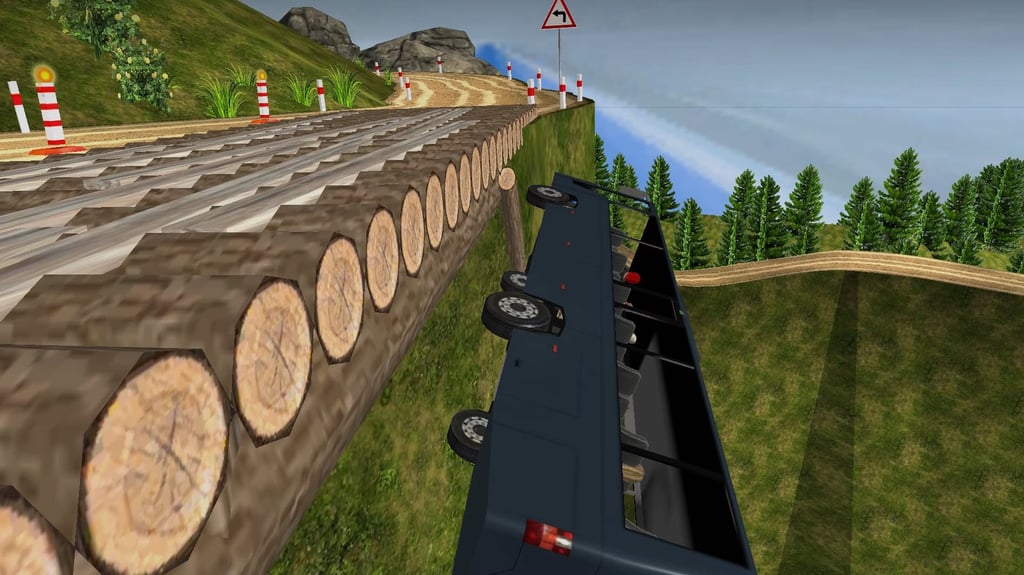
Table of Contents
Summary
Ever fancied driving a bus (or six) up an insanely steep and unforgiving mountain? Well, you’re in luck! Mountain Bus Simulator puts you behind the wheel of several buses where you’ll tackle 20 increasingly bonkers passenger routes up the steepest mountains imaginable, often with sheer drops into the abyss on either side.

These aren’t the typical roads you’re likely used to sliding through in your favorite touge drifting games, either. While your only objective is to get your passengers from A to B, you’ll encounter huge boulders in the road, landslides, stranded vehicles, and narrow cliff edges, which make careful driving (easier said than done in a huge bus!) more important than speed.
The Career Mode rewards you for successful trips and lets you (eventually) save up to buy the five additional buses. If you don’t fancy trying to keep passengers happy, Free Mode lets you explore what the full map has to offer, but you won’t earn any cash for the super vehicles.
It’s super simple to pick up, but the unforgiving full-level restarts when you screw up, and (ridiculously) expensive bus unlocks make progress feel a little slow. Despite this, it’s a great, unique offering if you’ve got some time to burn and fancy doing something you’ll likely never get to do in the real world!
Features
- Release date – December 2019
- Difficulty – Beginner/Intermediate
- Levels/environments – 20 Career levels (and Free Mode)
- Number of vehicles – 6
- Vehicle customization/upgrades – No
- Multiplayer – No
- Mobile – No
- Developer – 8Games
Physics
You’ll quickly realize that the starter bus feels properly heavy. It takes time to gain speed (especially on the steep uphills), struggles to maintain momentum if you don’t keep the throttle planted on the steep climbs, and loves to understeer if you go in too hot. Unfortunately, it’s not quite so keen to oversteer!

Along the way, you’ll encounter plenty of obstacles and rough ground that’ll leave you wrestling with the wheel, so your counter-steering skills come in useful with keeping it on the straight (and very narrow) rather than kicking out the rear.
Braking also needs a bit of restraint. Lifting off early before the steeper, harsher corners works well, but going in too fast and slamming on the brakes will often leave you locking up and driving off the edge. It definitely lives up to its name, and doesn’t try to be overly entertaining, which is why it’s a great, unique addition to our simulator games collection.
One quirk that you might need to watch out for. Once the bus stops, the brake input becomes reverse, so holding it too long can send you backward while you’re trying to stop inside a pickup zone. Since there’s no handbrake to yank, it can sometimes be trickier than it sounds (especially while the clock is ticking!).
Reverse gear can also be temperamental. So, if nothing happens, edging forward before trying again often gets the bus moving.
Graphics

The presentation is amusingly far-fetched (I sure wouldn’t wanna be a passenger on these buses!), and somewhat dated, but some of the later mountain views are impressive. The insanely steep landscape gives the simple scenery more scale, while occasional city sections (usually at the end) add some welcome flat variety into the mix.
Most obstacles you’ll face in Career are static rather than needing to think about moving traffic, but it still creates tight squeezes when the bus barely fits. It’s usually other vehicles that have crashed, broken down, or been hit by a rock/landslide!
The final (end point in later stages) city bus stations provide their own obstacles with barriers and parked cars crowding the tight entrance, where you might wanna consider switching cameras to avoid scraping them.
Press C to try every camera. The cockpit view has an amusing upside-down rear-view mirror, which can still be useful when checking side clearance. The top-down camera is even better when it’s a super tight gap, and you need to know exactly where the corners of the bus are headed.
Controls
PC/laptop/Chromebook
- W/Up arrow – Accelerate
- S/Down arrow – Brake/reverse
- A/Left arrow – Steer left
- D/Right arrow – Steer right
- C – Change camera
- I – Toggle engine/ignition
- Mouse click – Open/close passenger doors
I couldn’t find a helpful use case for switching the engine off, besides terrifying passengers on the downhills! There also doesn’t seem to be a convenient button for opening/closing the doors.
Mobile (iOS/Android)
Mountain Bus Simulator doesn’t work on phones or tablets, but we’ve got a huge collection of mobile games that play perfectly on touchscreens.
How to Play Mountain Bus Simulator
Initial Setup

Choose the free starter bus (it’s all you can afford at the start), select your level, and drive into the green pickup zone. Once the bus is positioned correctly, click “Open Door” to let passengers aboard, then close it before leaving. Only stops marked by the green area belong to your route, so you can ignore the others.

You don’t need pixel-perfect parking, but the door control won’t appear if too much of the bus sits outside the zone. Take a wide approach and remember that the rear wheels cut inside the path of the front (and avoid hitting the waiting passengers, or it’ll be an immediate game over).
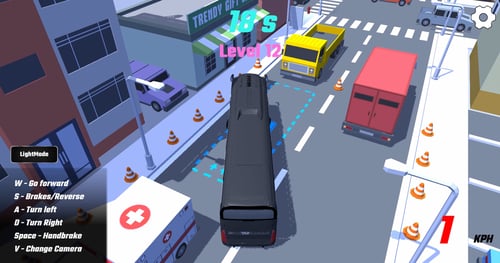
If you’ve enjoyed the challenge of squeezing buses through unthinkably tight gaps, Bus Parking Simulator 3D is a great alternative where you need to get into timed bays surrounded by cones and parked traffic. Our parking games also offer many more alternatives if you fancy a change from buses.
Getting Started

While it’s tempting to go full throttle, it doesn’t often end well in this game, so be prepared to start over. Watch out for the passenger-happiness meter (top-left) and the timer (top-right) rather than chasing speed.
The timer pauses during boarding, so don’t panic and accidentally drive into them, as you’ll (unsurprisingly) immediately fail the level.
Thankfully, your passengers aren’t too hard to please. They’ll forgive you for being a little rough over dips and speed bumps (I’m sure they’re used to them), but hitting posts, rocks, and the “harder” stuff will soon get them yelling at you. Focusing on smooth inputs is the best way to protect the happiness score, and you’ll be rewarded accordingly at the end.
Game Modes
Career Mode is the main event. The 20 increasingly challenging levels combine passenger pickups, super sketchy mountain roads, and cash rewards based partly on comfort and time.

On the later routes, you’ll need to squeeze your bus between rocks, stranded vehicles, and narrow cliff edges, sometimes sending you along temporary roads that look hilariously unsuitable for public transport.
The results screen provides a payout based on passengers carried, journey time, cash, comfort, and the time bonus. Later vehicles (if you eventually unlock them) offer better stats across the board and more seats, both providing bigger bonuses.

As you probably guessed, falling into the void or causing a serious collision (even if you’re near the finish) sends you all the way back to the start since the bus stops aren’t checkpoints. This is why it’s not really worth gambling an entire run for a slightly better time bonus, but that doesn’t mean you can’t push your bus to its limits along the way.

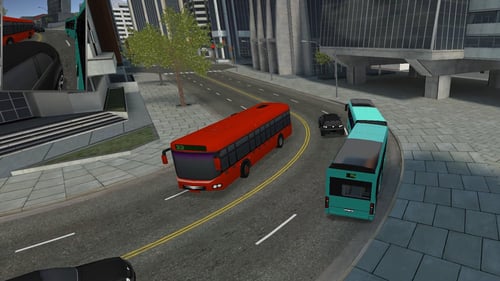
Free Mode removes the passengers, level goals, and earnings. It begins around a bus depot with traffic, speed bumps, and more conventional roads, making it the better place to test its limits. If you want a bus game with moving city traffic, schedules, mirrors, and road-rule penalties, give City Bus Driver: Clean Drive a try.
Or, if you fancy a chilled drive, Slow Roads lets you drive a bus (and other vehicles) through endless British countryside lanes, rolling hills (which are quite a bit different to these mountains), seasons, and weather without missions or crash penalties.
Bus List
There are six buses, and you’ll soon realize they’re all much more expensive than you’d like. While the cheapest is “just” 25,000 (wait until you see the payouts), it also escalates pretty quickly:
- Free starter bus

- 25,000
- 50,000
- 100,000

- 200,000

- 350,000
The expensive double-decker is the obvious end goal. While it’s not the quickest, the double-decker layout lets you reap the passenger rewards (not that you’ll be too worried about earnings by this point).
On the flip side, the 200,000 coach will be the smarter target if you’re more interested in performance than passenger bonuses (but either one will take an eternity to unlock regardless). Thankfully, the free starter can still complete all the routes, so another bus isn’t a requirement to progress through the career.
You can inspect displayed performance figures before buying, but there isn’t enough supported detail to treat the lineup as six clearly specialized machines. Choose by the information shown in the garage rather than assuming the highest price guarantees the best performance.
Progression, Grind & Alternatives
Career earnings are the only progression system. Sadly, there’s no upgrades, tuning, or handbrake turns, for that matter! You’ll save money from your earnings, buy another bus, and repeat.
Unfortunately, the math ain’t really mathing here. Early runs pay out just a few hundred, while the first bus costs 25,000 (and eventually 350k!). Although the payouts gradually increase beyond 2,000 around Level 10, it’s still not fast enough to make the unlocks feel reasonably paced. So, you’ll undoubtedly need to expect to replay some completed levels if you’re determined to fill the garage.
Our bus games section offers many more games that make it easier to unlock better vehicles. Some also offer off-road challenges and bus-focused sandboxes. If the (brief) parking moments have been the highlight here, Parking Master: Urban Challenges offers 54 unique challenges with a selection of vehicles, along with a much-needed handbrake and mobile support.
Advanced Tips & Tricks
Make sure you build up enough momentum before the steep climbs

Build sensible speed before an incline and try to avoid any unnecessary steering corrections. The starter bus can bog down badly after slowing (even a little bit) on a hill, leaving you crawling toward the next bend. Unfortunately, there’s no nitrous to save you here, either!
Don’t leave it until the last second to rely on the brakes
Lift early on the descents, and approach blind corners as though there’s an obstacle beyond them (because there often is).
If an emergency stop makes the bus begin sliding forward, easing off or pulsing the brake can give the front wheels a better chance to steer. ABS isn’t gonna save you here!
You’ll probably need more room than you think for wide turns
It takes some getting used to, but given the length, the bus’s rear wheels follow a tighter line than the front.
Practice moving outward before sharp turns (free roam is useful here), then watch the inside rear corner around poles, barriers, parked vehicles, and other solid obstacles.
Take your time when navigating through the bus station

Wait for the entrance barriers to rise before turning toward the parked cars, then use a wide approach through the tight entrance, or you might end up hitting one of the passengers’ cars in the parking lot.
Switch between the cameras to check for clearance
The normal view is ideal on open roads, but the top-down camera gives a clearer reference when you’re navigating tricky sections and super narrow ledges.
Use the cockpit mirror for a quick side check (upside down or not!), and switch views before committing to a gap rather than scraping your way through it.
You might need a few attempts to slam the gearbox into reverse
If the bus refuses to reverse, edge forward and try the brake/reverse input again. It’s clearly got a dodgy old gearbox.
On a slope, release it as soon as the bus is positioned because holding down can force you to go back more than intended. Your passengers probably won’t appreciate an accidental downhill escape (understandably!).
Mountain Bus Simulator FAQ
Can you drift the buses in Mountain Bus Simulator?
Unfortunately not. You don’t even get a handbrake. Carrying too much speed normally produces understeer instead, and that’s the closest you’ll get to a loss of traction.
What’s the best bus to buy?
The 200,000 bus features the strongest stats, while the most expensive vehicle is the 350,000 double-decker, which is great for reaping the passenger bonuses.
Why does the passenger happiness fall?
Crashes and hitting roadside objects reduce passenger comfort, but thankfully they’re quite forgiving when it comes to fast driving over rougher terrain.
Do I need to stop at every pickup point?
No. You only need to consider stops with the green pickup zone, since the passengers are also waiting for other buses.
How do you open the passenger doors?
Stop inside the green pickup zone, then click the on-screen “Open Door” button with your mouse, followed by “Close Door”.
Written by:
Published on:

Bill is a writer and photographer who has been part of the Drifted team since 2015. His work extends to various print and online publications, including Wangan Warriors.
As part of the King of Nations team, he traveled extensively for several years, capturing top-tier international drift events worldwide. His hands-on experience, including rebuilding his own Nissan Silvia S15 drift car, gives him unique insights into drift car building and global drift culture.
When not behind the lens or keyboard, Bill can be found browsing classifieds for his next JDM project or shredding virtual tires on popular simulators like Assetto Corsa, CarX, and Forza.
You can learn more about Bill’s story here or follow his socials on X (formerly Twitter), Flickr, Facebook, and Instagram.
 Bus Parking Simulator 3D
 City Bus Driver: Clean Drive
 Beam Drive Car Crash Test Simulator
 Drift Police Simulator
 Drift Race Simulator
 Online Car Destruction Simulator 3D